
Your child is melting down in the middle of the grocery store, and no amount of reasoning is helping. Or maybe they’ve gone completely silent and withdrawn, and you’re not sure why. If you’ve ever felt unsure how to handle your young child’s emotional storms, you’re not alone. Children aged 3 to 6 are navigating a flood of feelings they don’t yet have the words or tools to manage.
At Mosaic Montessori Academy, we treat emotional development as one of the most important parts of early childhood. It’s woven into every aspect of our learning environment. Learning more about Montessori philosophy is a great place to start seeing how this approach works.
Montessori education approaches emotional development as a natural, essential part of growing up, not a problem to be fixed. Rather than managing behaviour from the outside in, Montessori gives children the environment, language, and practice to regulate themselves from the inside out. Here’s how that actually works.
What ‘Big Emotions’ Look Like in Young Children
Common Signs in Children Aged 3 to 6
- Outbursts, tears, or withdrawal during transitions like leaving the park or switching activities
- Difficulty naming or expressing how they feel, often saying “I don’t know” or saying nothing at all
- Physical reactions like hitting, hiding, or freezing when emotions become too much to process
These responses are developmentally appropriate. The part of the brain responsible for emotional regulation is still very much under construction at this age. Your child isn’t being difficult. They’re being three, four, or five. If you’re curious about how Montessori addresses some of the harder behavioural moments, this look at the impact of time-outs on children offers some useful perspective.
The Montessori View on Emotional Development
Emotions as Part of the Whole Child
In a Montessori setting, feelings are treated as natural signals, not disruptions to be quickly corrected. Emotional growth is seen as deeply connected to a child’s independence and self-awareness. When your child learns to notice and name what they’re feeling, they become more capable of navigating the world around them.
This approach shifts the goal from compliance to genuine emotional literacy. Rather than teaching children to suppress or push through big feelings, Montessori supports them in understanding those feelings and building real coping skills over time. You can explore how this connects to the broader purpose of Montessori education and why it puts so much emphasis on the whole child.
How the Environment Shapes Emotional Safety
The physical space in a Montessori classroom is designed with your child’s nervous system in mind. Calm, uncluttered spaces reduce sensory overwhelm and help children feel settled rather than overstimulated. Everything in the room is child-sized and accessible, which quietly communicates that this space belongs to them.
Predictable daily routines also play a big role. When your child knows what comes next, they feel a sense of security that makes it easier to handle the unexpected moments that do arise. Taking a closer look at what a Montessori classroom looks like can help you picture exactly how that calm, structured space comes together.
Tools & Practices That Help Children Regulate
The Peace Corner & Its Role
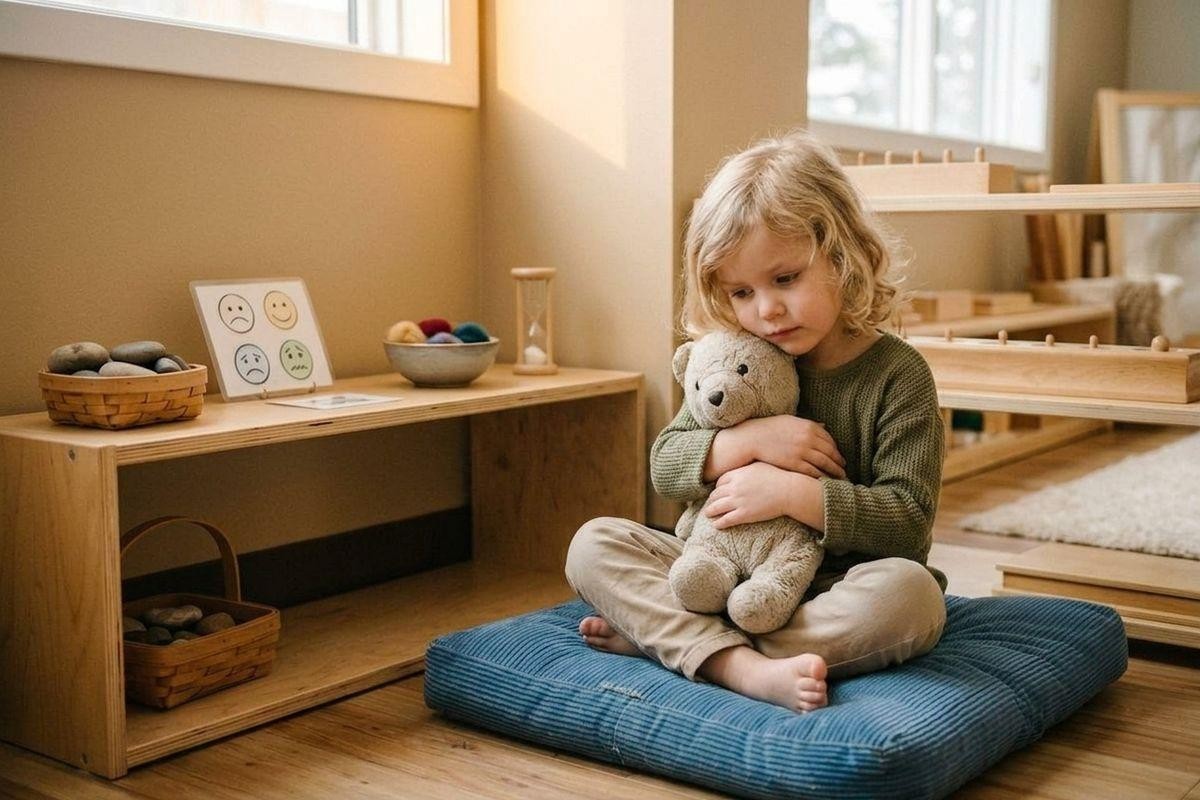
A peace corner is a quiet, designated space in the classroom where a child can go when they need to reset. It might include soft cushions, calming objects, or simple breathing visuals. The key detail is that it’s accessible to children without a teacher needing to direct them there.
This matters because it puts the child in charge of their own calm. They learn to recognize when they need a break and to take steps to manage that feeling themselves. Over time, that becomes a skill they carry well beyond the classroom. This connects closely to how Montessori maintains discipline through self-direction rather than external control.
Practical Life Activities & Emotional Balance
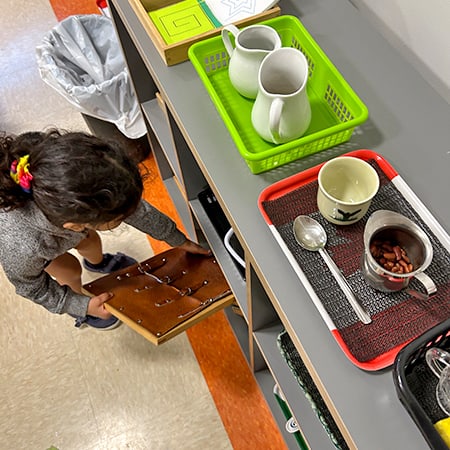
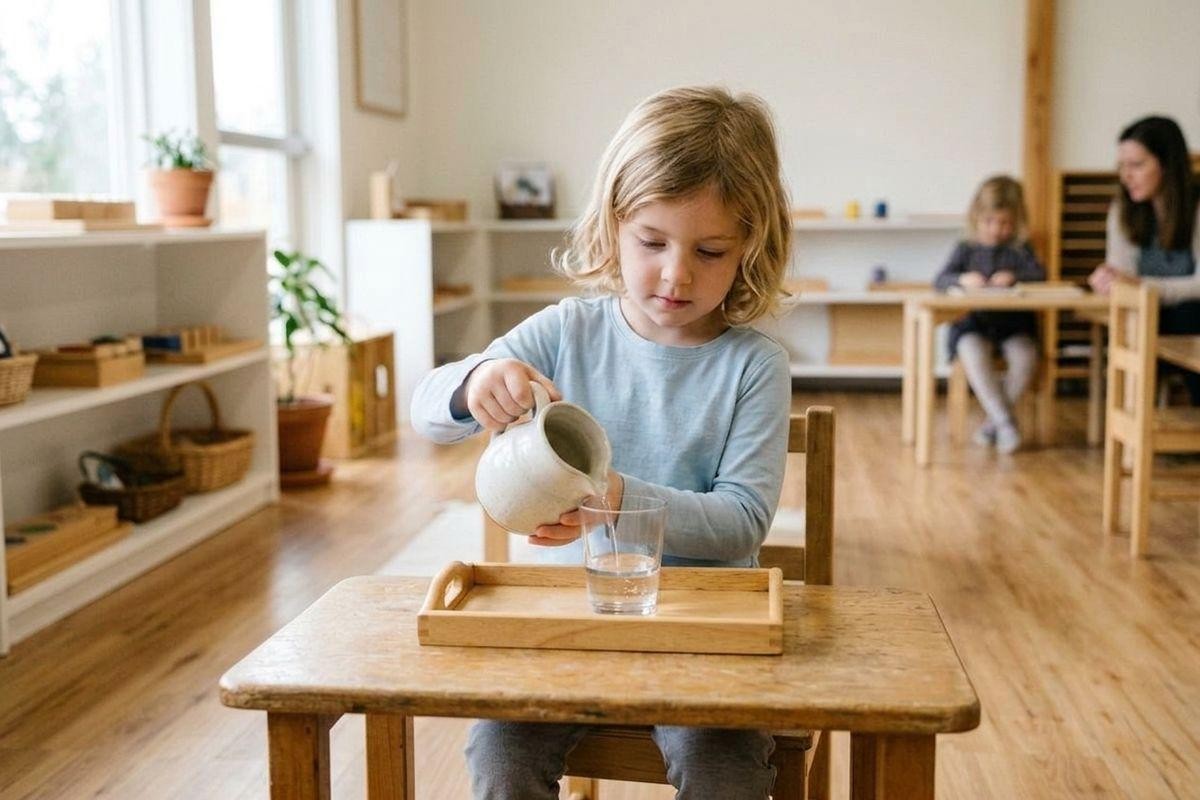
Practical life activities, things like pouring water, folding cloth, or arranging flowers, do more than teach everyday skills. They give restless or overwhelmed children something concrete and satisfying to focus on. The repetitive, hands-on nature of these tasks naturally draws the mind into a calm, focused state.
When your child can channel big energy into purposeful movement, they’re not just busy. They’re building the inner steadiness that emotional regulation actually requires. Learning more about why practical life activities matter in Montessori can give you a deeper appreciation for how much these simple tasks accomplish.
How Calgary Montessori School Guides Emotional Growth
The Role of the Montessori Teacher
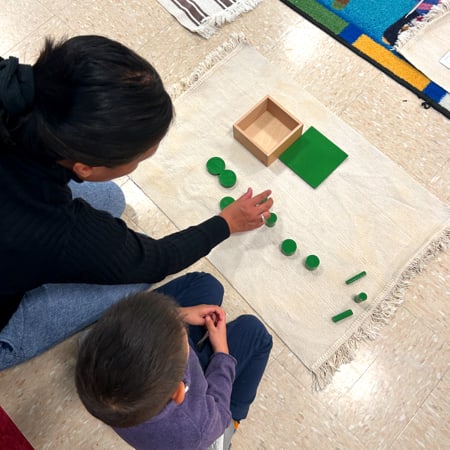
A Montessori teacher observes first and steps in second. Rather than immediately redirecting or correcting, they watch to understand what a child actually needs in a given moment. This thoughtful approach means responses are calm, respectful, and genuinely attuned to the child in front of them.
Children notice this. When they consistently see adults respond to difficulty with patience rather than frustration, they absorb that model and begin to reflect it in their own behaviour over time. You can read more about the teacher’s role in a Montessori classroom to understand how that guided independence shapes emotional growth every day.
A Community That Supports the Whole Family
At Mosaic Montessori Academy, our CASA program (the formal name for Montessori’s 3-6 environment) treats the relationship with families as part of the approach. Parents receive guidance on strategies that align with what their child is learning at school. When your home environment and the classroom speak the same emotional language, your child gets to practice those skills everywhere, not just between drop-off and pickup.
That consistency makes a real difference. Growth that happens in one place can take hold more deeply when it’s supported in another. Exploring how to incorporate Montessori at home can help you build that same supportive environment for your child outside of school.
What You Can Do at Home to Support Your Child
You don’t need to overhaul your home to apply Montessori-inspired emotional support. Small, consistent choices can have a meaningful impact on how your child experiences and processes big feelings.
- Use simple emotion vocabulary during everyday moments, not just during meltdowns. Narrate what you notice: “You look frustrated. That puzzle piece isn’t cooperating.”
- Set up a small calm-down space at home, a cozy corner with a soft item and maybe a few quiet activities your child can turn to when things feel like too much.
- Follow your child’s lead rather than rushing to resolve their emotions. Sitting with them in the feeling, before jumping to solutions, helps them feel genuinely heard.
Emotional development is a long-term process, and your child is already working hard at it every day. The tools they build now lay the groundwork for how they’ll handle challenges, relationships, and setbacks for years to come. If you’re looking for more ways to support your child alongside their emotional growth, these five ways to help build self-esteem offer practical, Montessori-aligned ideas you can start using right away.
Mosaic Montessori Academy is here to walk that journey alongside your family. If you’d like to see how our CASA program (Children’s House) supports your child’s emotional and intellectual growth in a Montessori environment, reach out to book a tour today.