
You’ve probably walked into a room and immediately felt calm, focused, and ready to get things done. The space just worked. Now imagine a classroom designed to give your child that exact feeling every day. This is one of the most foundational concepts at Mosaic Montessori Academy, and it shapes what your child experiences from the moment they walk through the door.
A prepared environment is a thoughtfully designed space built around your child’s developmental needs, where every material, piece of furniture, and corner of the room serves a specific purpose in supporting independence and self-directed learning. At a Montessori school, the environment is not just a backdrop—it is the learning.
The Prepared Environment Explained
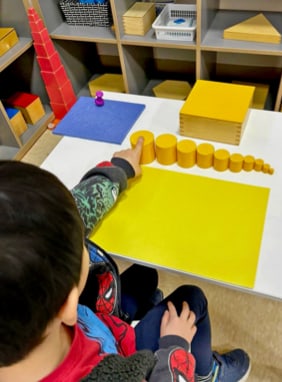
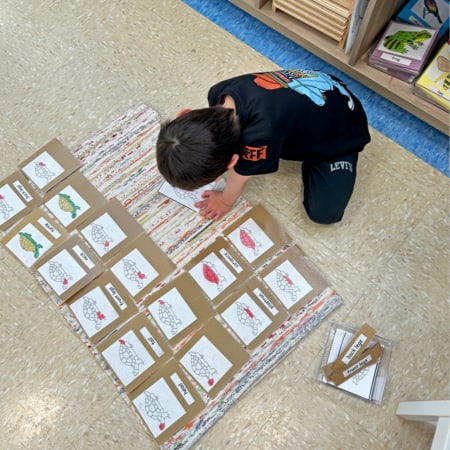
Think of the prepared environment as a room that says “yes” to your child at every turn. Shelves are within reach. Materials are organized and ready to use. The layout makes it easy for your child to choose an activity, work through it, and put it back, all on their own.
This kind of order does something powerful. When children know where things belong and how to access them independently, they develop a sense of confidence and calm that carries into their learning. The environment is not controlled or restrictive; rather, it is structured to enable. This freedom within structure is one of the core principles of the Montessori method that sets it apart from traditional schooling.
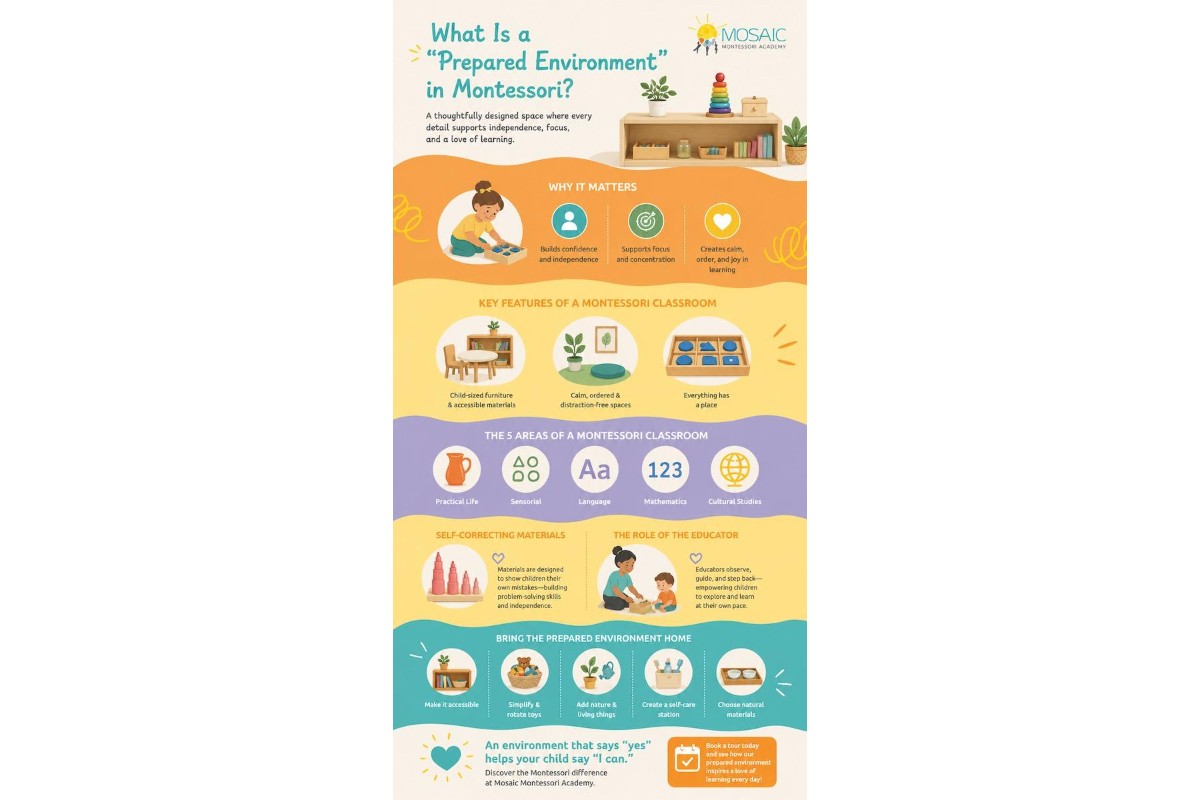
Key Features of a Montessori Classroom
Child-Sized Furniture & Accessible Materials
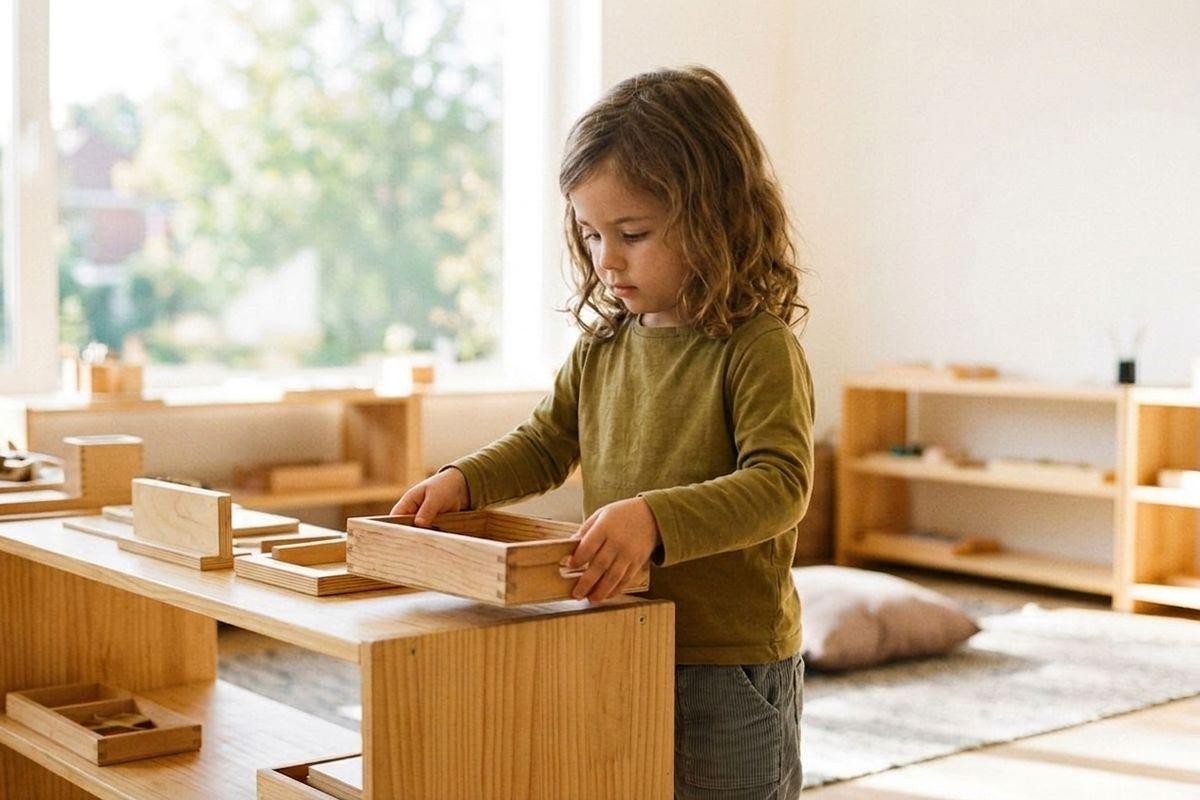
Low shelves, small tables, and scaled chairs mean everything is at a child’s level, literally. This simple design choice sends a clear message: you can do this yourself.
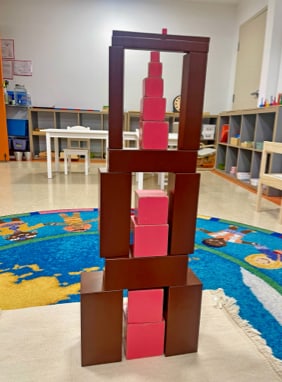
The materials themselves are made from natural elements like wood, glass, and metal rather than plastic. These textures give children a richer sensory experience and help connect them to the world they are learning about.
If you would like to extend this kind of learning to your home, exploring why Montessori toys are made of wood can help you make more intentional choices for your child’s play space.
Calm, Ordered & Distraction-Free Spaces
Walk into a Montessori classroom and you will notice the simplicity. No bright, cluttered walls. No noisy visual overload. Instead, you will find neutral colours, natural light, and a layout that feels open and intentional.
That simplicity is no accident. When a space is free of unnecessary distractions, your child’s attention naturally turns to the world in front of them. A tidy, ordered environment helps children focus more quickly and stay focused longer.
The 5 Areas of a Montessori School Classroom
Each Montessori classroom is divided into five distinct learning areas. Together, they give your child a broad, balanced foundation across all areas of early development.
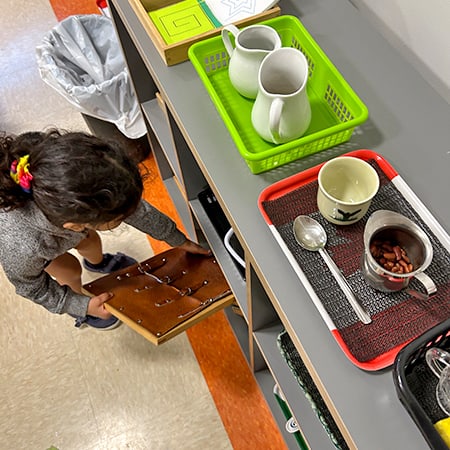
- Practical Life. Daily tasks like pouring, buttoning, and cleaning that build real independence and fine motor skills.
- Sensorial. Hands-on materials that sharpen the senses and help children sort, classify, and make sense of the world around them.
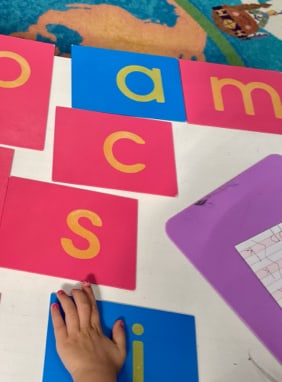
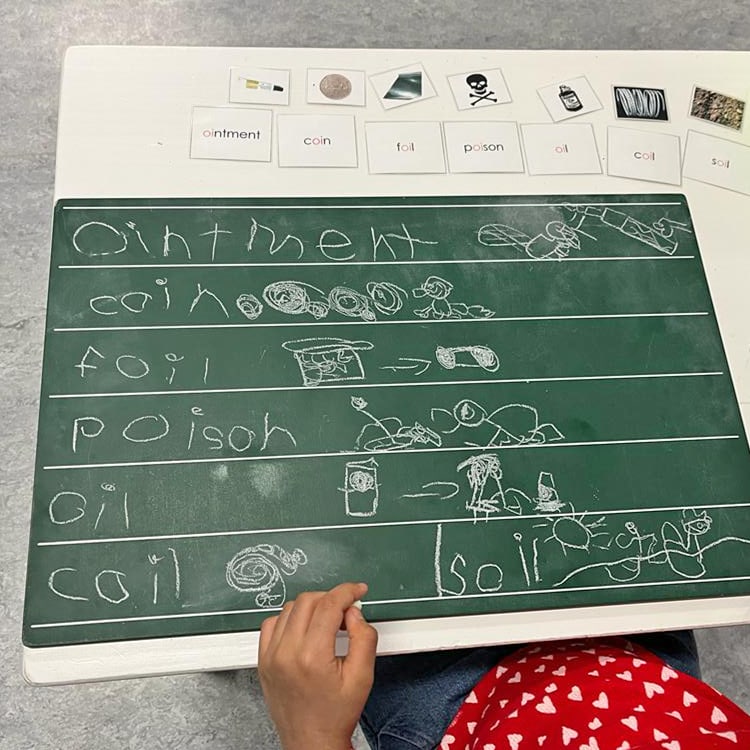
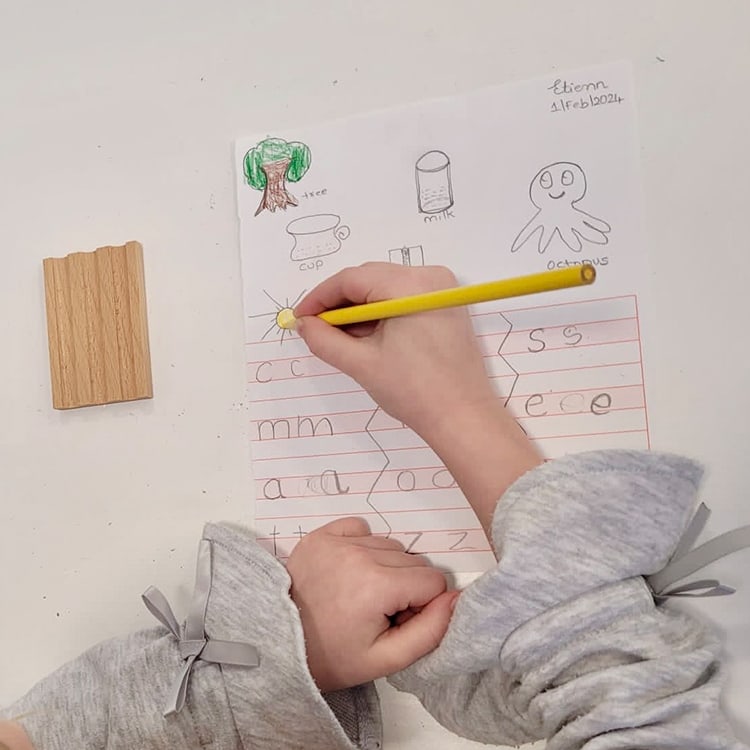
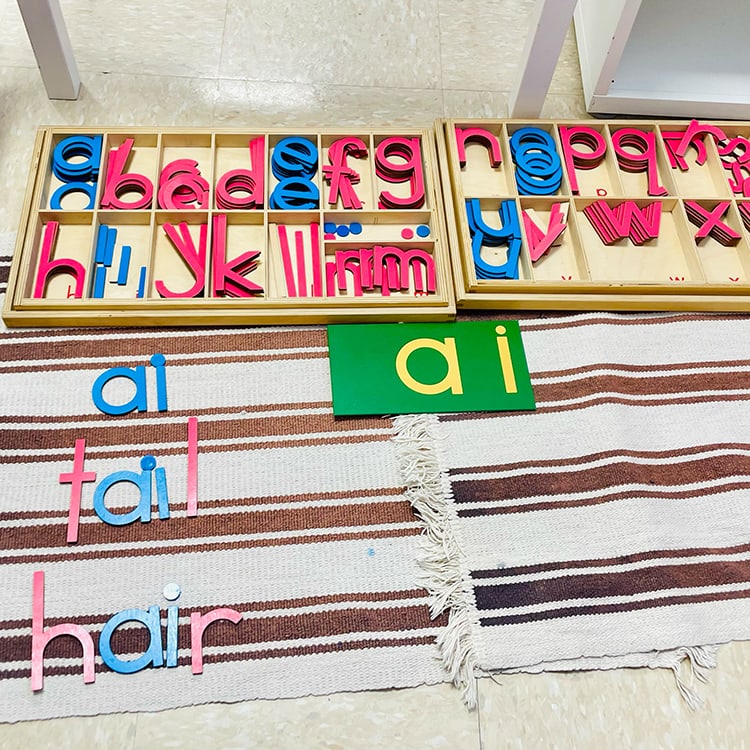
- Language. Phonics, writing, and early reading foundations introduced through tactile, engaging tools.
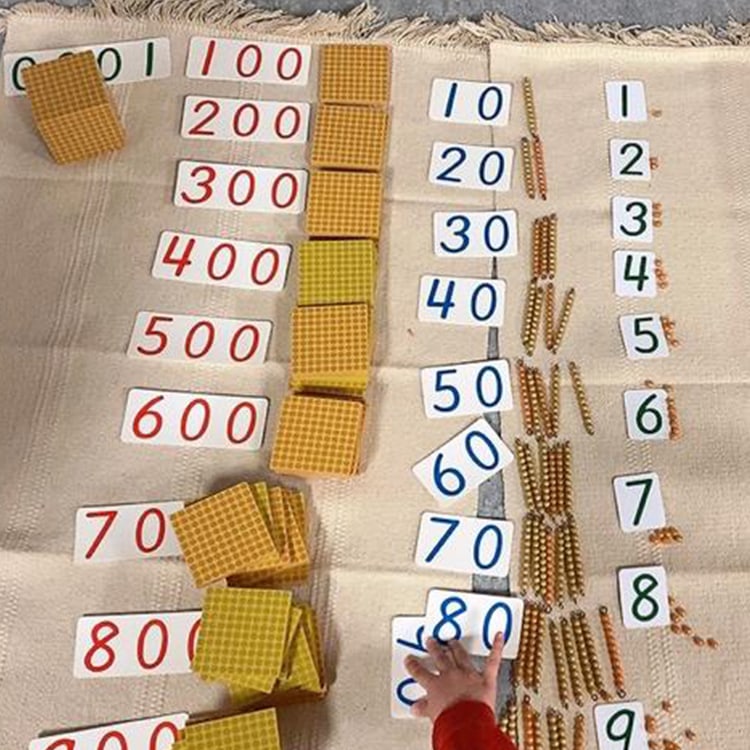
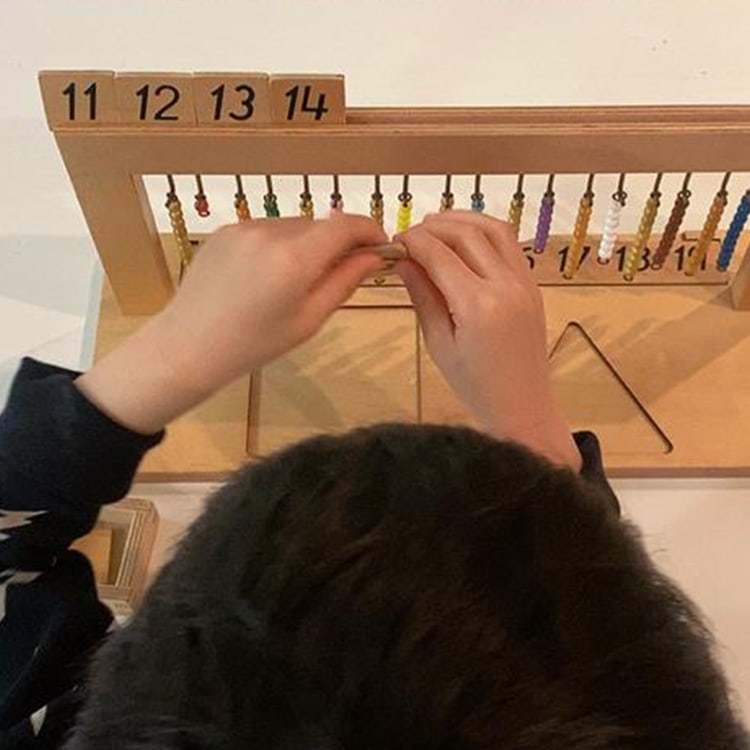
- Mathematics. Abstract concepts made tangible through physical materials children can see, touch, and manipulate.
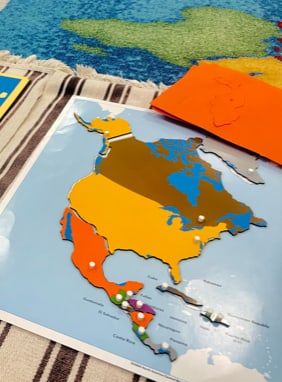
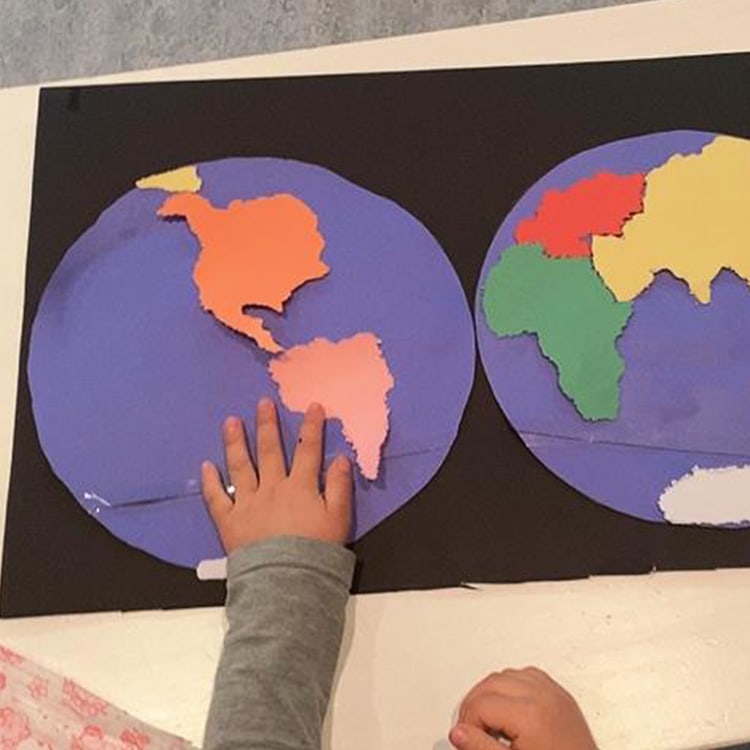
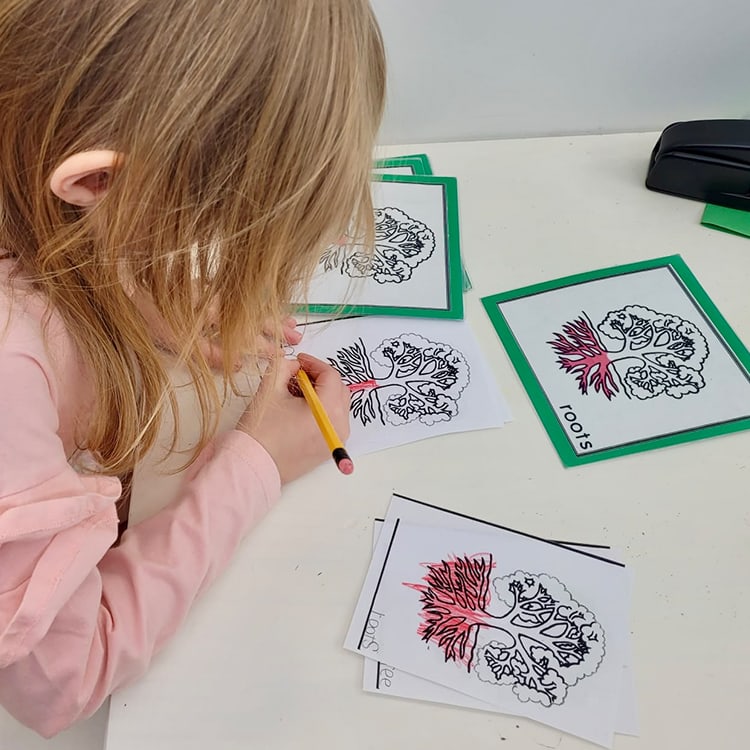
- Cultural Studies. Geography, botany, science, and art that connect children to the wider world in meaningful ways.
The sensorial area, in particular, plays a significant role in early cognitive development. Learning more about sensorial education in Montessori can give you a better idea of how hands-on materials support your child’s growing mind.
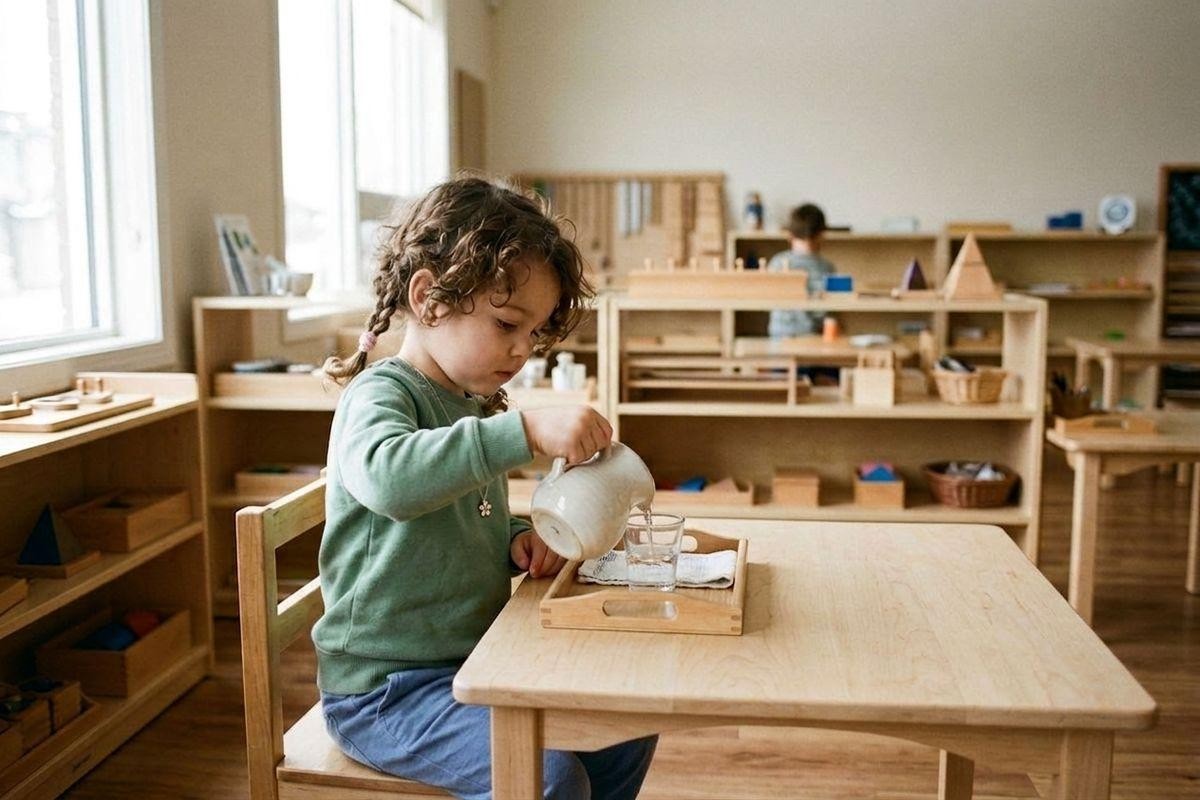
How Self-Correcting Materials Support Your Child’s Growth
Materials That Teach Without a Teacher
One of the most thoughtful features of the Montessori classroom is that many materials are designed to show your child when something is amiss.
This matters more than it might seem. When your child catches their own mistakes—for instance, when a puzzle piece does not fit—they build internal problem-solving skills rather than waiting for instructions. This kind of self-awareness is a foundation for lifelong learning and reflects the Montessori theory of intelligence, which views a child’s intellect as something to be nurtured, not measured.
The Role of the Montessori Educator
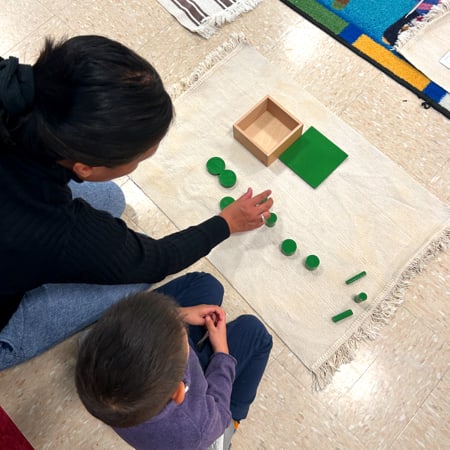
The role of a Montessori educator is not to stand around delivering lectures. Instead, they observe, guide, and step back, giving your child space to work through challenges independently. They attune themselves to each child’s pace and adjust the environment to meet each child’s needs.
This approach reflects the Montessori belief in auto education, the idea that children learn best when they are empowered to teach themselves through exploration and discovery. The educator makes that possible by preparing the space with intention.
Bringing the Prepared Environment Home
A few simple shifts can help reinforce Montessori principles at home:
- Add a low shelf or basket where your child can access books and toys on their own.
- Set up a small self-care station with their clothes, toothbrush, and daily items at their height.
- Limit the number of toys on display and rotate what’s available to keep curiosity fresh.
- Choose natural materials where possible and keep the space tidy and ordered.
- Add a small plant your child can help care for to connect them to the natural world.
These changes do more than make life easier: they also tell your child that you trust them to do things for themselves.
At Mosaic Montessori Academy in Calgary, the prepared environment is at the heart of our method. If you are curious about how this approach can support your child’s growth, contact our team to learn more.